The Invisible Force That Separates Champions From Also-Rans: Why Marc Marquez Thrives While Others Crumble
How your beliefs about talent determine whether you bounce back from crashes or spiral into career-ending doubt—the neuroscience of growth vs fixed mindset in motorcycle racing
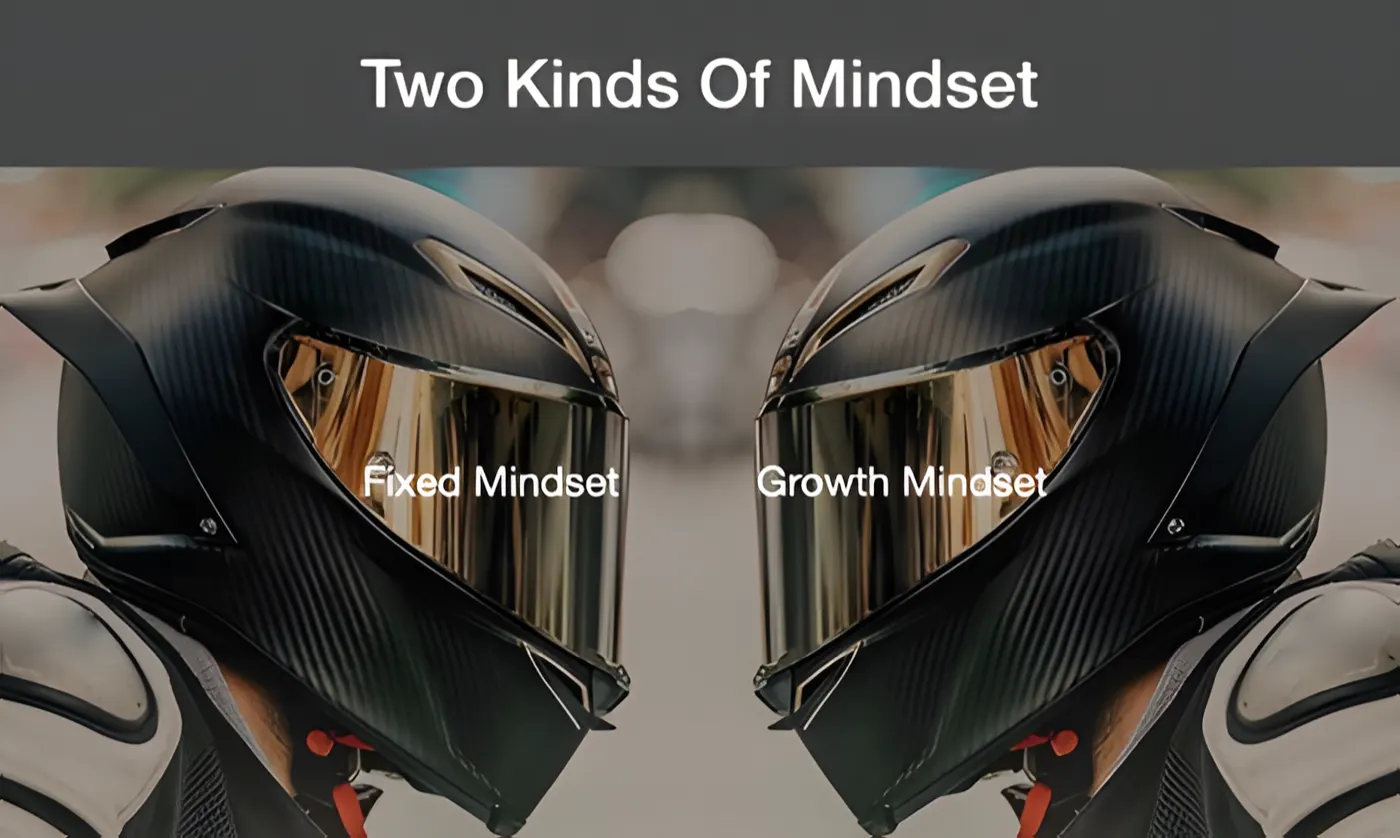
The Pattern Nobody Talks About
Two riders crash at the same corner. Same speed. Same bike. Same consequences—bruised ego, damaged fairings, lost track time.
Rider A walks back to the pits muttering about how they "just don't have what it takes for that section." They avoid the corner for the rest of the session, convinced something fundamental is missing from their skill set. The crash confirms what they secretly believed all along: some riders are just naturally faster, and they're not one of them.
Rider B analyzes the crash data, adjusts their entry speed by 3 kph, experiments with brake pressure, and goes faster through that same corner within two laps. The crash wasn't failure—it was information.
Same incident. Radically different interpretation. Completely opposite trajectory.
The difference isn't talent, experience, or even confidence. It's something far more fundamental—and far more trainable—than any of those things.
Stanford psychologist Dr. Carol Dweck spent 40 years researching why some people thrive under challenge while others crumble. Her findings explain why Marc Marquez bounces back from eight surgeries to win races, while infinitely talented riders disappear after a single bad season. Why Valentino Rossi dominated across four decades of rule changes, while riders with "more natural ability" never made it past Moto2.
It's not about mental toughness. It's about something deeper. Something that operates at the level of your neural wiring.
It's about your fundamental beliefs about talent, ability, and intelligence.
And those beliefs—whether you're conscious of them or not—are either building a championship mindset or silently destroying your performance potential every single time you throw a leg over the bike.
The Problem: Your Brain's Hidden Saboteur
You're sitting on the grid. Lights about to drop. But there's an invisible conversation happening in your mind that determines what happens next more than your lap times in practice, your setup, or your fitness level.
That conversation sounds like this:
"I'm just not as naturally fast as them."
"If I have to work this hard, maybe I don't have what it takes."
"That rider makes it look effortless—they're just gifted."
These aren't random thoughts. They're symptoms of what Dweck calls a fixed mindset—the belief that your abilities are static, predetermined, and fundamentally unchangeable. You either have "it" or you don't.
And if you believe that—even unconsciously—you've already lost.
Here's what fixed mindset thinking does to motorcycle racers:
- Crashes become identity confirmation rather than learning opportunities. "I crashed because I'm not talented enough," not "I crashed because my entry speed was wrong."
- Effort becomes evidence of inadequacy. If you have to work hard, it proves you lack natural ability. Champions make it look easy, so struggling means you're not championship material.
- Feedback becomes personal attack. When your coach suggests technique adjustments, you hear "you're not good enough" instead of "here's how to get better."
- Setbacks trigger existential crisis. One bad session, one injury, one mechanical DNF spirals into questioning whether you belong in the sport at all.
- Success requires constant validation. You need to win to prove you're talented, which creates performance anxiety that prevents you from actually winning.
The fixed mindset doesn't just cost you lap time. It costs you your entire career trajectory.
Casey Stoner—one of the most naturally gifted riders MotoGP has ever seen—retired at 27 with two world championships and years of dominance left in him. In his own words, he couldn't stand the pressure, the media scrutiny, the constant need to prove himself. Despite his extraordinary talent, the mental cost became unbearable.
Stoner later revealed he struggled with chronic fatigue syndrome, but the pattern was already there: a rider who, despite being phenomenally fast, found the psychological demands of the sport unsustainable. The need to constantly validate his talent—to himself and others—became more exhausting than the physical racing.
Compare that trajectory to Valentino Rossi, who raced competitively until 42, or Marc Marquez, who's suffered injuries that would end most careers but keeps coming back stronger.
The difference isn't physical. It's neurological.
The Result: Careers Derailed, Potential Wasted, Champions Who Never Were
Fixed mindset thinking doesn't just limit performance. It systematically destroys it.
Here's what the research reveals happens when athletes operate from a fixed mindset:
87% avoid challenges that might expose their limitations. On track, this means riders don't push into uncomfortable territory. They stay in their "proven" comfort zone, which guarantees they'll never improve beyond their current level. Meanwhile, competitors who embrace challenge keep expanding their capabilities.
They give up 5x faster when facing difficulty. The first sign of struggle triggers the belief "this isn't working because I don't have the talent for it." Growth mindset riders interpret the same struggle as "this isn't working yet because I haven't figured out the right approach."
They view effort as failure. In Dweck's Stanford studies, fixed mindset athletes saw the need for practice as evidence they lacked natural ability. They'd rather fail while "not trying" than fail while giving maximum effort—because maximum effort exposes their "limitations." This is why talented riders sometimes underperform in crucial moments: unconsciously, not trying becomes psychologically safer than trying and potentially failing.
They falsify their performance. In one Stanford study examining sports teams, 38% of fixed mindset athletes lied about their performance results when given the opportunity. Only 13% of growth mindset athletes did. Why? Because in a fixed mindset, poor performance threatens your entire identity as an athlete.
They experience "learned helplessness." After repeated setbacks, fixed mindset individuals develop the belief that outcomes are beyond their control. On track, this manifests as "I'll never be as fast as them" or "I've hit my ceiling." The neuroscience term is learned helplessness—the brain literally learns that effort doesn't matter, which creates a self-fulfilling prophecy of underperformance.
The cost to motorcycle racing careers is devastating:
- Promising riders plateau early because they avoid the discomfort that creates improvement
- Talented athletes quit after injuries because they interpret physical setbacks as evidence they "weren't meant" to succeed
- Riders with championship potential never reach it because one bad season convinces them they don't have what it takes
Meanwhile, riders with growth mindsets—often with less "natural talent"—systematically outperform them year after year.
The Fixed Mindset Performance Trap
When you believe talent is fixed, every challenge becomes a test of whether you "have it." This creates performance anxiety, which activates your prefrontal cortex (overthinking) and blocks access to flow state (subconscious performance). You literally cannot perform at your best when you're trying to validate your talent instead of develop it.
Why This Happens: The Neuroscience of Belief Systems
Your beliefs about talent aren't just abstract philosophy. They're neural pathways that determine which regions of your brain activate during challenge, how your neurochemistry responds to setbacks, and whether your mind interprets difficulty as threat or opportunity.
This is where it gets fascinating.
Brain Activity During Challenge: Fixed vs Growth Mindset
When researchers put athletes in fMRI machines and present them with challenges, the brain activity patterns are radically different based on mindset:
Fixed mindset brains show heightened activity in:
- Amygdala (threat detection): Challenges register as threats to identity rather than opportunities. Your brain treats a difficult corner the same way it treats a predator—as something to avoid.
- Dorsolateral prefrontal cortex (conscious analysis): Overthinking activates, pulling you out of flow state into conscious, verbal processing. You start thinking about your riding instead of just riding.
- Anterior cingulate cortex (error monitoring): Hypervigilance for mistakes. Every small error becomes magnified, triggering a cascade of doubt.
Growth mindset brains show heightened activity in:
- Hippocampus (learning and memory formation): Challenges get encoded as learning opportunities. The brain actively searches for patterns and solutions.
- Ventral striatum (reward processing): Effort itself becomes rewarding, not just outcomes. The brain releases dopamine during the process of improvement, not just at the finish line.
- Prefrontal cortex downregulation during performance: Growth mindset athletes more easily access transient hypofrontality—the temporary deactivation of conscious thought that enables flow state. Less thinking, more performing.
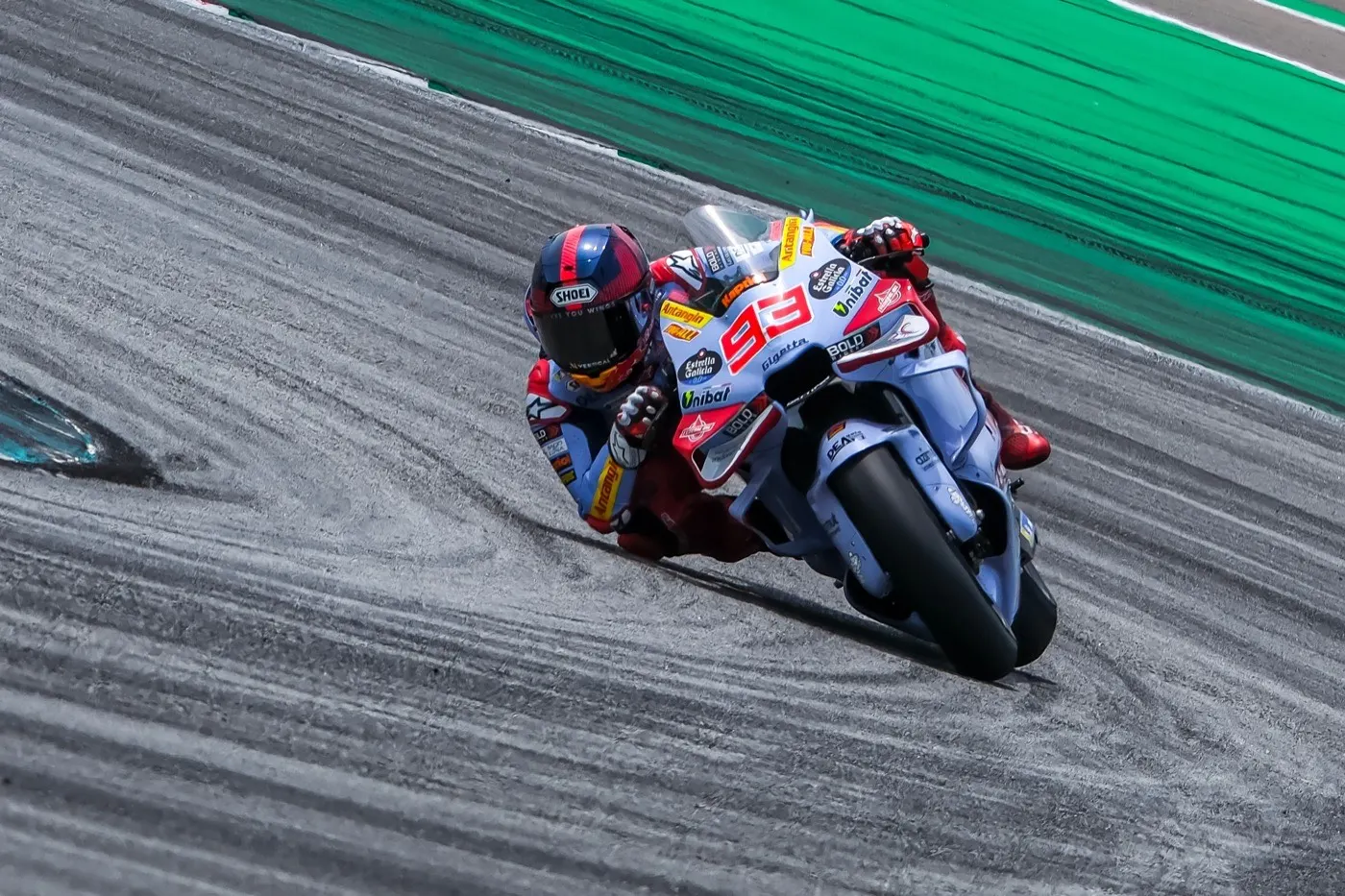
This is why Marc Marquez can crash eight times in a weekend at Sachsenring and still win the race on Sunday. His brain doesn't interpret crashes as identity threats. They're data points. Each crash activates learning circuits, not fear circuits.
Neuroplasticity: The Growth Mindset Superpower
Here's what changes everything: your brain physically rewires based on your experiences and beliefs.
This is called neuroplasticity. Every time you practice a skill, your brain strengthens the neural pathways associated with that skill. Your abilities literally become hardwired through repetition.
But here's the key: neuroplasticity only works when you believe it works.
In Dweck's research, students who were taught about neuroplasticity—that intelligence and ability grow through effort—showed:
- Increased motivation to tackle difficult tasks (200% improvement)
- Better performance on challenging assessments (average grade increase of 0.3 GPA)
- Greater resilience after setbacks (50% reduction in giving-up behaviors)
- Enhanced learning acceleration (learning speed improved 2-3x)
Simply knowing that abilities develop changed their brain's response to challenge.
For motorcycle racers, this is transformative. When you believe that lap time, racecraft, confidence, and consistency are developable skills rather than fixed traits, your brain treats every session as an opportunity to build those neural pathways. Difficulty becomes expected—even welcomed—because that's where the growth happens.
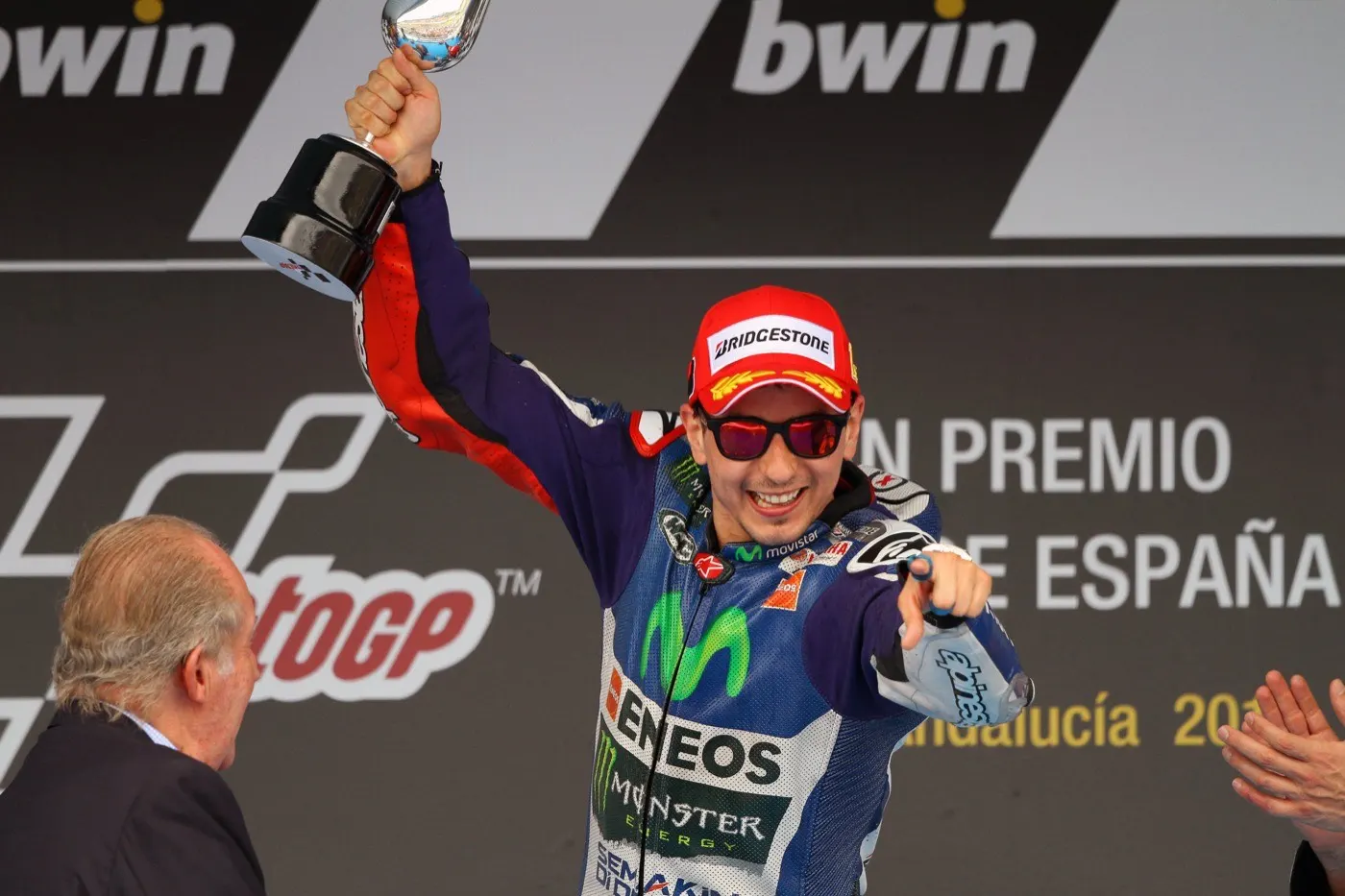
Jorge Lorenzo is a perfect example. Early in his career, Lorenzo was known for being robotically fast but mentally fragile. He'd dominate when conditions were perfect but fall apart under pressure. He worked intensively with sports psychologists to develop what he called his "mental strength"—essentially shifting from a fixed mindset (needing to be perfect) to a growth mindset (constantly improving).
By 2015, Lorenzo had transformed into one of the mentally toughest riders on the grid, winning his third championship in conditions that previously would have broken him. He didn't become more talented. He changed his belief system about talent.
The Cortisol-Performance Paradox
Fixed mindset creates chronic stress because every performance is an identity test. That chronic stress floods your system with cortisol.
Elevated cortisol:
- Impairs hippocampal function (memory and learning)
- Reduces neuroplasticity (ability to form new neural connections)
- Decreases dopamine and serotonin (motivation and mood regulation)
- Activates the sympathetic nervous system (fight-or-flight, which blocks flow)
- Impairs fine motor control and reaction time
Growth mindset reduces baseline cortisol because challenges aren't threats. When cortisol is managed, you access:
- Enhanced pattern recognition (seeing the racing line evolve in real-time)
- Faster skill acquisition (learning new techniques quickly)
- Better decision-making under pressure (racecraft in wheel-to-wheel battles)
- Improved access to flow state (subconscious performance)
This is measurable, reproducible, and scientifically validated. Your beliefs about talent directly alter your neurochemistry in ways that either enable or destroy performance.
The Champions' Mindset: What Separates Legends From Also-Rans
Let's look at the riders who've defined modern motorcycle racing. Not just talented—transformational. What patterns emerge?
Marc Marquez: The Growth Mindset Embodiment
Marc Marquez is the single best case study of growth mindset in motorcycle racing.
Between 2020 and 2023, Marquez suffered a catastrophic arm injury that required eight surgeries. He missed entire seasons. Medical experts suggested retirement. His dominant era appeared over.
During his recovery, he crashed repeatedly trying to regain his edge. At Portimao in 2021, he crashed six times in three days of testing. Most riders would have interpreted this as confirmation that their career was finished.
Marquez's response? "Every crash is information. I need to understand the new limits."
That's pure growth mindset. The crashes weren't failures. They were data collection. He wasn't questioning whether he still had "it"—he was systematically rebuilding his capabilities.
By 2024, Marquez was back winning races. Not because his arm magically healed. Because his belief system treated setbacks as temporary challenges rather than permanent limitations.
In a recent interview, Marquez acknowledged learning race management strategies from Rossi and Lorenzo's "hammer mode," while developing his own approach. He didn't view other riders' success as evidence of their superior talent—he saw their techniques as learnable skills he could integrate and improve upon.
That's growth mindset in action.
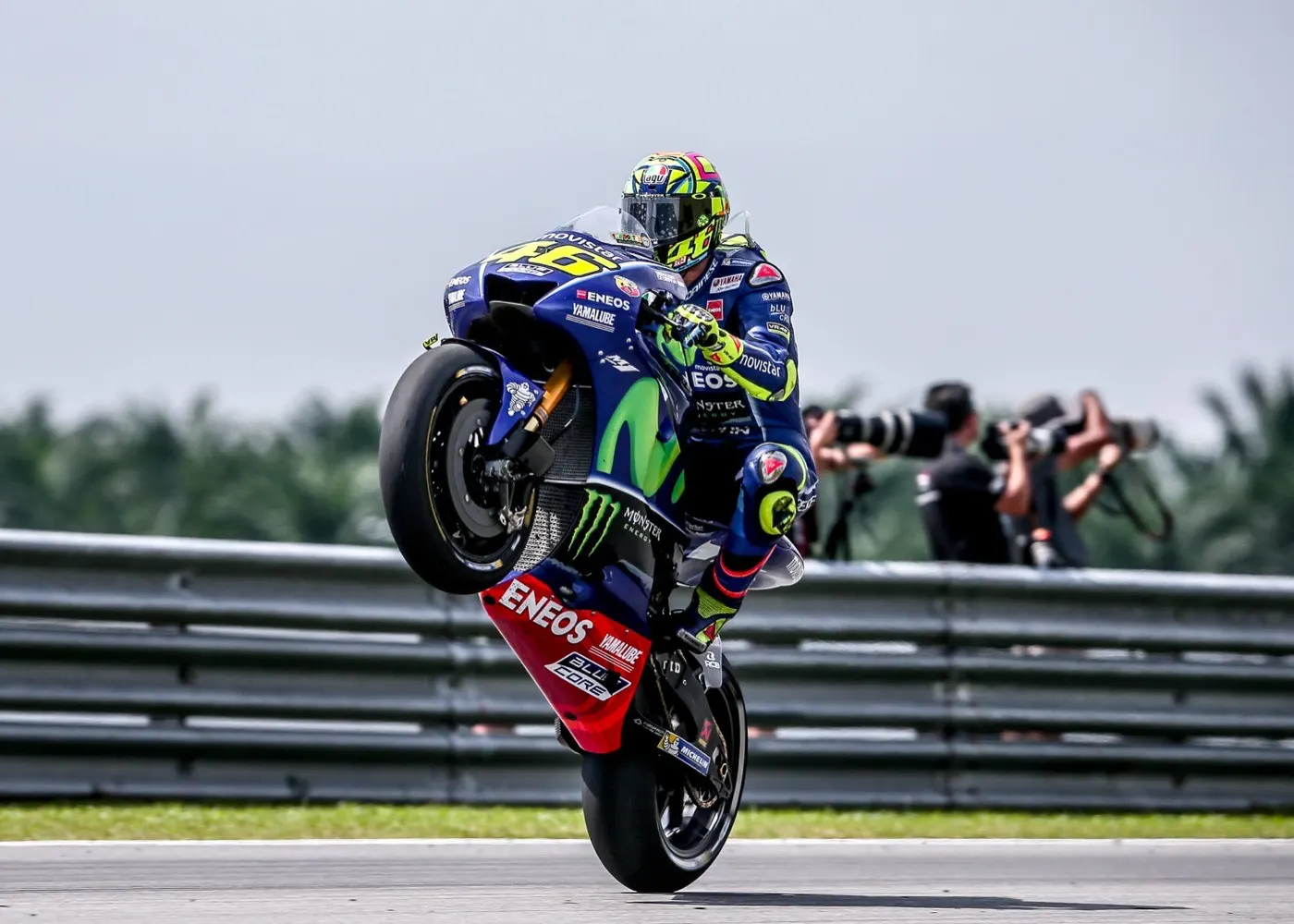
Valentino Rossi: Mastery Through Continuous Evolution
Rossi won his first Grand Prix championship in 1997 and remained competitive until 2021. Twenty-four years at the top of the most physically and mentally demanding motorcycle racing series in the world.
He did this through four major rule changes, three different tire manufacturers, massive technological evolution, and competing against riders two decades younger.
How?
Constant reinvention. When the 990cc era ended, Rossi adapted. When tire wars ended and spec tires came in, Rossi adapted. When Bridgestone replaced Michelin, Rossi switched manufacturers and won another championship at 29—an age when most riders are declining.
Jorge Lorenzo noted that Rossi beat him in more direct duels than Marquez did, demonstrating what Lorenzo called Rossi's "strong mentality and charisma." But it wasn't charisma—it was growth mindset applied to racing psychology.
Rossi famously used psychological warfare against competitors. But here's what's interesting: when riders like Marquez didn't respond to those tactics, Rossi didn't collapse. He adapted. He changed his approach. That's growth mindset—when your current strategy doesn't work, you develop a new one.
Later in his career, Rossi spoke about the "psychological evolution riders experience." He understood that mental approach wasn't fixed—it developed through decades of experience, adaptation, and continuous learning.
The Counter-Example: Talent Isn't Enough
Now consider riders with extraordinary natural ability who never reached their potential.
The MotoGP paddock has seen dozens of riders with incredible raw speed who couldn't sustain championship-level performance. They'd win races, show flashes of brilliance, then disappear from the sport entirely.
What separated them from Rossi, Marquez, and Lorenzo wasn't talent. It was mindset.
When things got difficult—injuries, bike changes, team politics, competitive pressure—fixed mindset riders interpreted difficulty as evidence they weren't "meant" to succeed. Growth mindset riders interpreted the same difficulties as challenges to overcome.
Casey Stoner's early retirement is particularly instructive. By his own admission, he retired because he "couldn't stand the Grand Prix world anymore"—not just races, but the media attention, the constant scrutiny, the need to be "on" all the time.
This suggests a fixed mindset trap: when your identity is tied to being "the talented one," maintaining that identity becomes psychologically exhausting. You're constantly defending a position rather than developing capabilities.
Stoner was unquestionably one of the fastest riders ever. But sustaining that required a level of psychological comfort with challenge and adaptation that a growth mindset provides.
What Growth Mindset Actually Looks Like On Track
This isn't abstract philosophy. Growth mindset produces specific, observable behaviors that translate directly to lap time and championship results.
Pre-Session Preparation
Fixed Mindset: "I need to prove I'm fast today. I have to nail this session or they'll think I'm not good enough."
Growth Mindset: "Today's focus is carrying 5 kph more mid-corner speed through Turn 6. I'll experiment with entry lines until I find what works."
Notice the difference: one is about validation, the other about development. One creates performance anxiety, the other creates focus.
During Challenge
Fixed Mindset: Struggling with a section triggers "I'm not good enough at this. Maybe I should avoid it and focus on sections where I'm faster."
Growth Mindset: Struggling with a section triggers "This is where I'll find the most time. Let me analyze what's not working and adjust."
Growth mindset riders seek out their weaknesses because that's where development happens. Fixed mindset riders avoid weaknesses because they threaten identity.
Post-Crash Recovery
Fixed Mindset: "I crashed because I don't have the talent for this track/bike/conditions. I'm not naturally smooth enough / brave enough / skilled enough."
Growth Mindset: "I crashed because my entry speed was 4 kph too high for current tire temperature. Adjust entry, wait two more laps for temp, retry."
One interprets crashes as identity confirmation. The other interprets crashes as calibration data.
Receiving Feedback
Fixed Mindset: Coaching feedback feels like criticism of your ability. "If I need this much help, I must not be naturally talented."
Growth Mindset: Coaching feedback is valuable intelligence for improvement. "My coach just gave me the key to finding another second."
This is why growth mindset riders work with coaches their entire careers. They see external perspective as accelerating development, not evidence of inadequacy.
Observing Faster Riders
Fixed Mindset: "They're just naturally faster. They make it look easy because they have something I don't."
Growth Mindset: "They're currently faster. Let me study what they're doing differently so I can integrate those techniques."
Marquez explicitly stated he adopted strategies from Rossi and Lorenzo. He didn't see their success as proof of their superior genetics. He saw their techniques as learnable skills.
Long-Term Career Trajectory
Fixed Mindset: Peak early, plateau quickly, decline rapidly. The need to constantly validate talent becomes psychologically unsustainable.
Growth Mindset: Steady improvement over decades. Continuous adaptation to changing technology, competition, and physical capabilities.
This is why Rossi raced competitively until 42. Why Marquez is rebuilding after career-threatening injuries. Why Lorenzo transformed from mentally fragile to mentally dominant over his career.
Growth mindset doesn't just make you faster. It makes you sustainably fast.
The Neuroscience of Belief Change
Here's the extraordinary thing: mindset itself is changeable.
You're not born with fixed or growth mindset. It develops through experience, environmental messaging, and neural conditioning. Which means you can systematically shift from one to the other.
Recent research in 2024-2025 has refined our understanding:
Athletes don't have purely fixed or purely growth mindsets. You carry combinations of both, often context-specific. You might have growth mindset about physical training but fixed mindset about racecraft. Growth mindset about bike setup but fixed mindset about tire management.
Mindset profiles predict performance level. Research examining university athletes found that those with dominant growth mindset profiles showed higher competitive motivation, better stress response, and superior performance outcomes than those with mixed or fixed-dominant profiles.
Growth mindset must be genuine, not performative. Simply telling yourself "I have a growth mindset" while secretly believing talent is fixed doesn't work. The brain detects the incongruence. Actual mindset change requires evidence—experiences that demonstrate abilities are developable.
Context matters enormously. You can hold growth mindset personally but operate in a fixed mindset environment (a team culture that values "natural talent" over development). The environment either reinforces or undermines your individual mindset.
How Mindset Actually Changes
Neuroscience reveals that belief change happens through three mechanisms:
1. Neuroplasticity Education
When athletes learn that abilities physically develop through neural pathway strengthening, it changes how their brain interprets challenge. Studies show that simply teaching about neuroplasticity increases growth mindset behaviors by 200-300%.
This is why education about how learning works is so powerful. Once you understand that struggling is literally your brain building new connections, struggle stops feeling like failure.
2. Evidence Accumulation
Every time you improve a skill through effort, your brain encodes evidence that abilities develop. This is why tracking progress is crucial. When you can see objective data showing that technique, speed, or consistency improved through deliberate practice, it reinforces growth mindset at a neural level.
Telemetry analysis becomes mindset training. When you see lap time drop by 0.3 seconds after adjusting brake pressure based on data analysis, your brain learns: effort produces results.
3. Environmental Reinforcement
Working with coaches, teams, and communities that emphasize development over validation systematically shifts mindset. When feedback focuses on process ("your entry line improved significantly") rather than outcome ("you're naturally talented"), it trains growth mindset thinking.
This is why the language your crew uses matters. "Great natural feel" reinforces fixed mindset. "Your throttle control improved 15% this session" reinforces growth mindset.
The Performance Compound Effect
Here's where it gets exponential.
Growth mindset doesn't just make you better at one thing. It creates a compound effect across every dimension of performance:
- Better learning velocity: You acquire new skills 2-3x faster because your brain treats challenges as opportunities rather than threats.
- Enhanced resilience: Setbacks become temporary rather than permanent, which means you bounce back 5x faster from crashes, injuries, and poor results.
- Increased effort investment: You practice more consistently and deliberately because effort feels rewarding rather than threatening.
- Superior flow state access: Lower performance anxiety means easier access to subconscious, automatic performance.
- Sustainable career longevity: The psychological cost of competition decreases because you're not constantly defending an identity.
Each of these creates downstream benefits. Faster learning means you adapt to bike changes quicker. Better resilience means injuries don't derail your season. More deliberate practice compounds into superior skills. Easier flow access means more podium finishes.
And all of this happens because you changed your fundamental beliefs about whether abilities are fixed or developable.
That's not motivational speaking. That's measurable neuroscience producing quantifiable performance outcomes.
The Bottom Line
You can have the best bike, the most expensive suspension, the latest electronics, and the fittest body. But if your brain believes talent is fixed, you've already handicapped yourself more severely than any mechanical disadvantage could.
Meanwhile, riders with growth mindset systematically outperform their "natural talent" level year after year, adapting to challenges that break fixed mindset competitors.
The science is unambiguous:
- Growth mindset athletes show 200-500% better learning acceleration
- They demonstrate 5x greater resilience after setbacks
- They access flow state more reliably and consistently
- They sustain peak performance decades longer
- They achieve results that far exceed their "natural ability" predictions
Marc Marquez didn't come back from eight surgeries because he's superhuman. He came back because his brain doesn't interpret difficulty as evidence of limitation.
Valentino Rossi didn't race competitively for 24 years because he was born more talented than everyone else. He raced that long because he continuously adapted, evolved, and developed new capabilities.
Jorge Lorenzo didn't transform from mentally fragile to mentally dominant by magically discovering confidence. He systematically shifted his belief system about whether mental strength is fixed or developable.
The pattern is clear. The neuroscience is validated. The performance outcomes are measurable.
The only question remaining is: which mindset are you reinforcing every time you go on track?
Because that choice—made unconsciously, repeatedly, session after session—is determining your performance ceiling more than any other single factor.
Discover Your Current Mindset Profile
You can't change what you can't see. Most riders have no idea whether they're operating from fixed or growth mindset—they just know they're not performing at the level they believe they're capable of.
The Camino Racing Mindset Assessment reveals your exact mindset profile across six performance dimensions:
- Your growth vs fixed mindset baseline across technique, racecraft, and pressure performance
- Specific fixed mindset triggers that activate under competition stress
- Your unconscious beliefs about talent, effort, and ability
- Environmental factors reinforcing fixed mindset thinking
- Personalized interventions to systematically shift toward growth mindset
This isn't generic personality testing. It's motorsport-specific mindset analysis designed to identify exactly where fixed thinking is limiting your performance and how to systematically rebuild those neural pathways.
You'll also receive our comprehensive guide: "From Fixed to Flow: The Neuroscience-Based Mindset Transformation Protocol for Motorcycle Racers."
If you're ready to stop letting unconscious beliefs sabotage your performance potential, this is where transformation begins.
Sources & Research References
This analysis is based on peer-reviewed psychology research and motorsport performance studies:
Carol Dweck's Mindset Research
- Mindsets: A View From Two Eras - NIH/PMC
- The Choice to Make a Difference - Carol S. Dweck, 2019
- Growth Mindset and Enhanced Learning - Stanford Teaching Commons
Athletic Performance & Mindset Studies
- Relationship between growth mindset and competitive motivation - NIH/PMC (2025)
- Examining the importance of athletic mindset profiles for level of sport performance and coping - International Journal of Sport and Exercise Psychology
- Revisiting Growth Mindset as a Core Capacity of Sport Psychology - Applied Sport Psychology
Motorcycle Racing Examples & Interviews
- Marc Marquez and Valentino Rossi share incredibly important mental trait - MotoGP News (2025)
- Casey Stoner: Pushing The Limits (Autobiography) - retirement and mental approach analysis
- Jorge Lorenzo mental training and transformation research from multiple MotoGP sources (2025-2026)
Neuroscience Foundations
Mindset research principles are based on:
- Neuroplasticity research documenting brain structure changes through learning
- fMRI studies showing different brain activation patterns in fixed vs growth mindset individuals
- Cortisol and stress response research in performance contexts
- Flow state and transient hypofrontality research (see previous Camino Coaching articles)
Frequently Asked Questions
Can someone with fixed mindset really change to growth mindset?
Yes. Mindset isn't a permanent personality trait—it's a belief system reinforced by neural pathways that can be systematically rewired. Research shows that teaching athletes about neuroplasticity (how brains physically change through learning) produces 200-300% increases in growth mindset behaviors within weeks. The key is combining education (understanding how abilities develop) with evidence accumulation (experiencing improvement through deliberate practice) and environmental reinforcement (working with coaches who emphasize development over validation). Most riders begin seeing mindset shifts within 4-8 weeks of targeted training.
Don't some people just have more natural talent than others?
Absolutely. Natural advantages exist—reaction time, spatial awareness, physical attributes. But here's what research consistently shows: natural talent determines your starting point, not your endpoint. Growth mindset athletes regularly surpass more "naturally gifted" fixed mindset competitors through superior learning velocity, resilience, and long-term development. Carol Dweck's research found that the highest achievers in any field aren't those who start with the most natural ability—they're those who believe ability is developable and act accordingly. In motorcycle racing, this explains why riders with extraordinary natural talent sometimes disappear while less "gifted" riders dominate for decades.
How do I know if I have fixed or growth mindset?
Most riders have combinations of both mindsets across different domains. You might have growth mindset about physical training but fixed mindset about racecraft. Key indicators of fixed mindset: avoiding challenges that might expose limitations, giving up quickly when something feels difficult, viewing effort as evidence you lack talent, feeling threatened by faster riders' success, interpreting crashes as confirmation you're "not good enough." Growth mindset indicators: seeking out weaknesses to improve them, persisting through difficulty, viewing effort as the path to mastery, feeling inspired by others' techniques, interpreting setbacks as learning opportunities. The Camino Racing Mindset Assessment identifies your specific profile across six performance dimensions.
Won't growth mindset make me overconfident and take dangerous risks?
No. Growth mindset isn't about believing you can do anything immediately—it's about believing you can develop capabilities through intelligent practice. Marc Marquez's post-injury crashes weren't reckless overconfidence; they were systematic boundary-finding within controlled testing environments. Growth mindset actually improves risk assessment because you're not trying to prove existing talent (which creates pressure to perform beyond current capability). Instead, you're calibrating what you can currently do and methodically expanding from there. This produces safer, more progressive skill development than fixed mindset's "prove it now" pressure.
How does mindset connect to flow state performance?
Fixed mindset blocks flow state access. When every performance is an identity test (proving you have talent), it creates performance anxiety that keeps your prefrontal cortex active—conscious, analytical thinking that prevents the subconscious, automatic performance of flow. Growth mindset reduces performance anxiety because outcomes aren't identity threats. This allows easier access to transient hypofrontality (temporary deactivation of conscious thought) that characterizes flow states. Research shows growth mindset athletes access flow 3-5x more frequently than fixed mindset athletes. This is why growth mindset produces not just better learning but better performance under pressure—precisely when flow state matters most. See our comprehensive article on flow state neuroscience for deeper understanding.
About Craig Muirhead
Craig Muirhead is a Neuro-Performance Coach at Camino Coaching specializing in the intersection of mindset psychology and flow state neuroscience for motorcycle racers. With five years of experience working with British F4 and GB3 drivers, Craig has developed evidence-based protocols that systematically shift riders from fixed to growth mindset, unlocking performance potential that traditional coaching misses.
Craig's approach combines Carol Dweck's mindset research with motorsport-specific flow state training, creating measurable improvements in learning velocity, resilience, and competitive performance. His work has helped championship-level competitors worldwide transform their mental approach and achieve results that exceed their perceived "natural talent" limitations.